

Few destinations on Earth compress such breathtaking diversity into a single country the way Morocco does. This North African kingdom sits at a fascinating crossroads where the Sahara Desert meets the Atlantic Ocean, where ancient Islamic civilization meets Berber mountain culture, and where centuries-old traditions coexist alongside contemporary cosmopolitan energy. Morocco travel rewards every type of explorer the history enthusiast, the adventure seeker, the culinary traveler, and the photographer with experiences that linger long after the journey ends..
Why Morocco Captivates Travelers Worldwide
Morocco’s appeal stems from a rare combination of accessibility and authenticity. Unlike destinations where tourism has polished away genuine cultural character, Morocco maintains its raw, layered identity. Walking through the medina of Fes feels genuinely like stepping into a living medieval city rather than a curated museum experience. Spending a night in the Sahara Desert under unpolluted stars delivers wonder that no photograph adequately prepares you for. Sharing mint tea with a Berber family in an Atlas Mountain village creates human connections that transcend language barriers.
The country’s geographic compactness amplifies its appeal. Morocco is small enough that a well-planned two-week journey can incorporate imperial cities, mountain villages, Atlantic coastal towns, and Saharan dunes without excessive travel fatigue. Yet within those distances, landscapes shift so dramatically that each day feels like entering an entirely different country. This density of experience makes Morocco extraordinarily efficient for travelers working within limited vacation time.
The Imperial Cities: Historical and Cultural Heartbeat
Morocco’s four imperial cities Marrakech, Fes, Meknes, and Rabat collectively tell the story of a civilization stretching back over a thousand years and form the cultural backbone of most Morocco travel itineraries.
Marrakech, the “Red City,” draws travelers into its orbit through sheer sensory intensity. The central square of Jemaa el-Fnaa transforms throughout the day from a morning fruit market into an evening theater of storytellers, musicians, acrobats, and food vendors. The surrounding medina harbors souks organized by trade spice merchants, leather workers, copper artisans, carpet weavers where genuine craftsmanship continues centuries-old traditions. The Bahia Palace and Saadian Tombs reveal the architectural ambitions of sultans who made Marrakech one of Africa’s most magnificent courts.
Fes, Morocco’s spiritual capital, takes the medieval experience even further. The UNESCO-listed medina of Fes el-Bali contains approximately 9,400 lanes and alleys where cars cannot penetrate and donkeys still serve as primary transport. The University of Al-Qarawiyyin, founded in 859 CE, holds recognition as the world’s oldest continuously operating degree-granting institution. The Chouara Tannery, where leather has been processed using identical medieval methods for over a millennium, presents one of travel’s most visually striking scenes a honeycomb of stone vessels filled with natural dyes viewed from surrounding terrace viewpoints.
Landscapes That Define Morocco Travel
Beyond the imperial cities, Morocco’s natural landscapes provide some of the world’s most dramatic and varied scenery.
The High Atlas Mountains rise dramatically south of Marrakech, with peaks exceeding 4,000 meters creating a natural barrier between the Atlantic coast and the Sahara. The famous Tizi n’Tichka mountain pass, climbing to 2,260 meters, winds through Berber villages where traditional earthen architecture blends into hillsides as if grown rather than built. Trekking opportunities abound, from day hikes through Berber farming villages to multi-day ascents of Jebel Toubkal, North Africa’s highest peak.
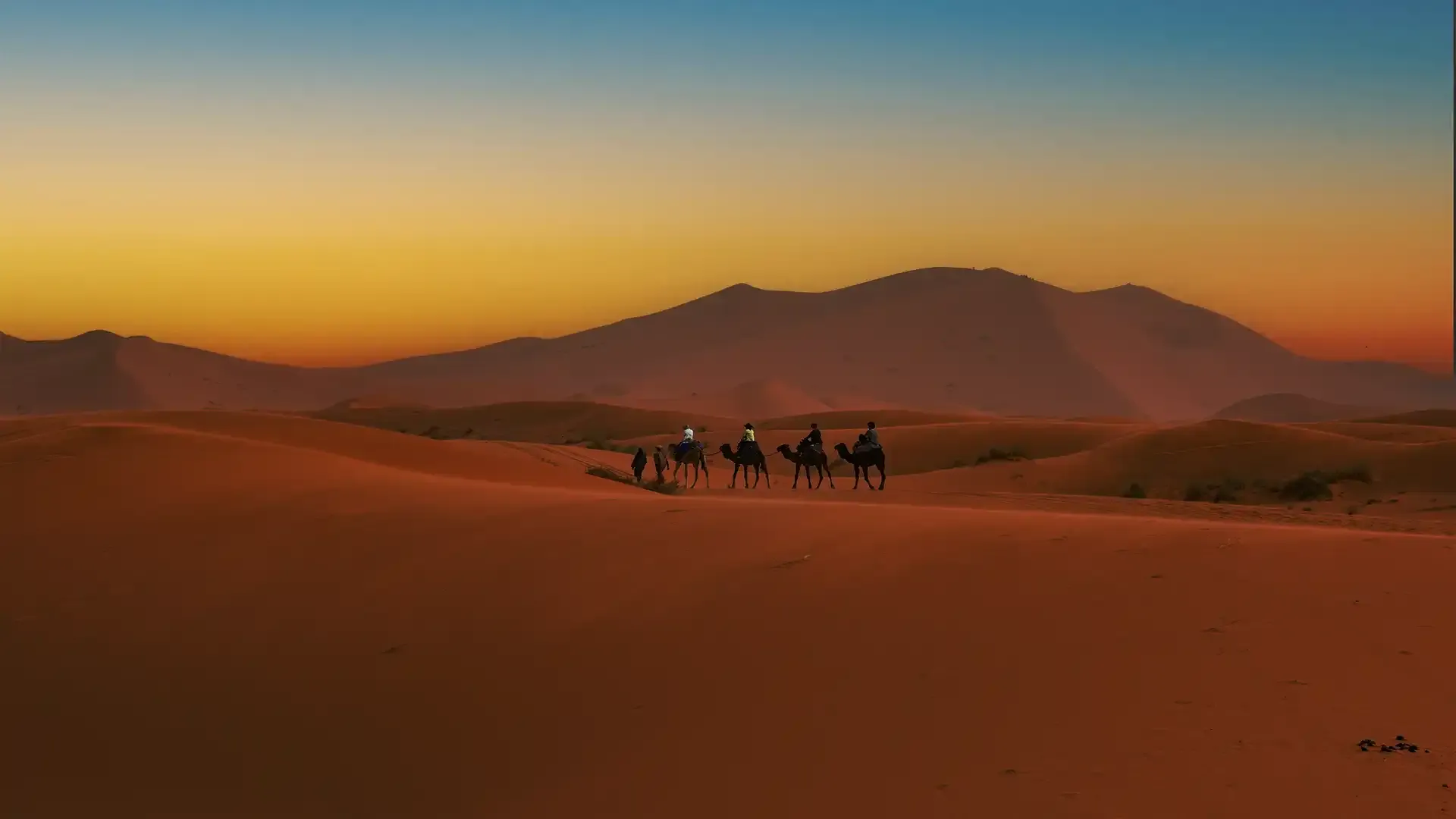
The Sahara Desert, accessible primarily through the gateway town of Merzouga near the Erg Chebbi dune field, delivers experiences that rank among travel’s most transformative. Towering sand dunes exceeding 150 meters create a landscape of extraordinary beauty that changes character completely with shifting light throughout the day. Camel treks into the dunes at sunset, nights in traditional Berber camps beneath the Milky Way, and pre-dawn climbs to watch sunrise ignite the sand sea in brilliant gold these moments crystallize why the Sahara occupies such powerful places in human imagination.
The Atlantic coast adds another dimension entirely. Essaouira, a UNESCO World Heritage coastal town with whitewashed medina walls and blue fishing boats, offers refreshing contrast to inland intensity. The constant Atlantic trade winds attract windsurfers and kitesurfers while keeping temperatures comfortable year-round. Fresh seafood grilled at the harbor, art galleries throughout the medina, and a remarkably relaxed atmosphere distinguish Essaouira from anywhere else in Morocco.
Moroccan Cuisine: A Journey Within the Journey
Morocco travel becomes a culinary adventure that rivals any aspect of the physical journey. Moroccan cuisine ranks among the world’s most sophisticated, built on foundations of slow cooking, fragrant spice combinations, and the philosophical belief that preparing food for guests represents an act of genuine hospitality.
Tagine the slow-cooked stew named after the conical clay vessel in which it cooks comes in infinite regional variations. Lamb with prunes and almonds, chicken with preserved lemon and olives, kefta meatballs with eggs simmering in spiced tomato sauce each represents a distinct culinary tradition. Couscous, traditionally prepared on Fridays in family homes, achieves textural perfection in the hands of experienced cooks. Pastilla, the extraordinary sweet-savory pie of shredded pigeon or chicken enclosed in paper-thin pastry dusted with cinnamon and powdered sugar, demonstrates the Persian and Andalusian influences woven throughout Moroccan culinary history.
Street food culture thrives throughout Morocco, with Marrakech’s Jemaa el-Fnaa offering dozens of food stalls serving everything from snail soup to grilled merguez sausages. Msemen flatbreads cooked on griddles, fresh-squeezed orange juice from iconic carts, and steaming bowls of harira soup represent daily culinary experiences available for just a few dirhams. These street-level food encounters often prove more memorable than restaurant meals, offering direct connections to daily Moroccan life.
Practical Morocco Travel Essentials
Understanding practical realities enhances Morocco travel significantly. The country’s currency, the Moroccan dirham, is not internationally traded, so exchanging money upon arrival at airports or city bureaux de change proves necessary. ATMs function reliably in cities but become scarce in rural areas, making cash management important for travelers venturing into the Atlas Mountains or desert regions.
Transportation within Morocco spans multiple options. The national train network connects Casablanca, Rabat, Meknes, Fes, Marrakech, and several other cities with comfortable, punctual service at very reasonable prices. For reaching desert regions, mountain areas, and coastal towns not served by trains, private taxis, shared grands taxis, or organized tours become necessary. Renting a car provides maximum flexibility for independent travelers comfortable with Morocco’s driving culture, though urban traffic in medina areas proves challenging even for experienced drivers.
Accommodation options span extraordinary ranges from budget hostels within medina walls to boutique riads featuring hand-painted ceilings and central fountain courtyards to luxury desert camps with private ensuite tents. Staying in riads traditional Moroccan courtyard homes converted to guesthouses provides authentic experiences unavailable in international hotel chains. These intimate properties typically offer between four and fifteen rooms, rooftop terraces with city views, and genuinely personalized service that large hotels cannot replicate.
When to Visit Morocco
Morocco’s climate varies dramatically by region, making timing an important planning consideration. Spring (March through May) offers optimal conditions almost universally comfortable temperatures across all regions, wildflowers blooming in mountain valleys, clear skies for photography, and moderate tourist numbers. Autumn (September through November) provides similarly ideal conditions with the addition of harvest season agricultural markets and date festival celebrations in desert oases.
Summer (June through August) brings extreme heat to desert and inland areas, with temperatures frequently exceeding 40°C, though Atlantic coastal towns remain comfortable with ocean breezes. Winter (December through February) delivers cold desert nights requiring warm clothing but provides crystal-clear skies perfect for stargazing, snow-capped Atlas peaks creating dramatic landscape photography, and significantly fewer tourists at major sites.
Ramadan, the Islamic holy month following a lunar calendar, creates a unique travel experience that both challenges and enriches. Daytime food and drink availability becomes limited, but evenings transform into extraordinary communal celebrations as families break fast together and cities come alive after dark.
Conclusion
Morocco travel rewards those who approach the country with curiosity, flexibility, and genuine openness to encountering a civilization profoundly different from their own. The imperial cities offer architectural wonders and cultural depth rivaling any destination on Earth. The Sahara Desert delivers experiences that reframe human perspectives on silence, space, and natural beauty. The Atlantic coast provides refreshing contrast while the Atlas Mountains offer adventure and Berber cultural immersion. The cuisine nourishes body and soul simultaneously.
What distinguishes Morocco most powerfully is the warmth of its people the genuine hospitality that makes strangers feel welcome, the artisans proud to share their skills, the guides passionate about their country’s history, and the families who invite travelers into their lives with generosity that leaves lasting impressions. Morocco does not merely offer sights to see but experiences to feel, connections to forge, and perspectives to permanently expand.
FAQ
Q: Do I need a visa to travel to Morocco?
A: Most Western nationalities including citizens of the USA, UK, European Union countries, Canada, and Australia receive visa-free entry to Morocco for stays up to 90 days. Your passport must remain valid for at least six months beyond your intended departure date. Some nationalities require advance visa applications through Moroccan embassies. Always verify current requirements for your specific nationality before travel, as regulations occasionally change. A return ticket and proof of accommodation may be requested at entry.
Q: Is Morocco safe for tourists?
A: Morocco is generally safe for tourists and receives millions of international visitors annually without serious incident. The country maintains strong tourism infrastructure and the government prioritizes visitor safety. Standard precautions apply remain aware in crowded medinas where pickpocketing occasionally occurs, use reputable transportation, avoid displaying expensive jewelry or electronics unnecessarily, and trust instincts in unfamiliar situations. Solo female travelers should dress modestly and remain confident in navigating occasional unwanted attention. Check your government’s current travel advisory for updated safety information before departure.
Q: What language do Moroccans speak and will I manage with English?
A: Morocco’s official languages are Arabic and Amazigh (Berber), with French widely spoken as a practical second language throughout business, government, and tourism. Spanish is commonly understood in northern regions near Spain. English proficiency has grown significantly in tourist areas, with guides, riad staff, and many restaurant workers communicating competently in English. Outside tourist centers, French proves more useful than English. Learning a few basic Arabic phrases greetings, thank you, numbers generates genuine appreciation from locals and enhances cultural interactions significantly.
Q: What should I pack for Morocco travel?
A: Packing depends on your itinerary regions and travel season. Universal essentials include modest clothing covering shoulders and knees for medina and rural areas (both men and women), comfortable walking shoes for cobblestone medinas, sun protection (hat, sunglasses, SPF 50+ sunscreen), and a light scarf for women visiting religious sites. Desert trips require layers for dramatic temperature swings, with cold nights even in summer. Mountain trekking demands proper hiking shoes and warm layers. Bring adapter plugs (European Type C/E), a small daypack for excursions, and any prescription medications as specific products may be unavailable.
Q: How much does Morocco travel typically cost?
A: Morocco accommodates wide budget ranges. Budget travelers spending in hostels, eating street food, and using public transport manage comfortably on €40-60 daily. Mid-range travelers staying in good riads, dining in restaurants, and joining organized excursions typically spend €100-180 per person daily. Luxury travelers choosing boutique riads, private tours, fine dining, and exclusive desert camps budget €300-600+ daily. Morocco generally offers excellent value compared to European destinations, with high-quality food, authentic accommodation, and rich cultural experiences available at prices significantly below Western European equivalents.
Q: What cultural customs should I respect while visiting Morocco?
A: Respecting Moroccan customs significantly enhances travel experiences and local interactions. Dress modestly in medinas, rural areas, and religious sites this applies to both genders. Always ask permission before photographing people, particularly women and rural communities. Remove shoes when entering mosques (where non-Muslims are permitted), homes, and some traditional spaces. Accept tea invitations graciously as refusal can seem impolite. Avoid public displays of affection, particularly outside cosmopolitan areas. During Ramadan, refrain from eating, drinking, or smoking in public during daylight hours. Engage with locals respectfully and approach cultural differences with curiosity rather than judgment.
Q: Can I drink tap water in Morocco?
A: Tap water in Morocco is technically treated but may cause stomach upset in travelers whose digestive systems are unaccustomed to local water conditions. Bottled water is universally recommended for drinking and widely available at very low costs (large 1.5-liter bottles typically cost 5-8 dirhams). Use bottled water for brushing teeth if your stomach proves sensitive. Ice in established restaurants is generally safe as most use purified water. When in doubt, particularly in rural areas, stick strictly to sealed bottled water and hot beverages like mint tea where water has been boiled.
