

Few regions in Nepal combine raw mountain scenery, living Tibetan Buddhist culture, and true solitude the way the Manaslu and Tsum Valley circuit does. The Manaslu Tsum Valley Heli Trek is a modern take on this classic route. You walk the most rewarding stretches on foot, then fly out by helicopter, saving several days of hiking while still experiencing the heart of the region.
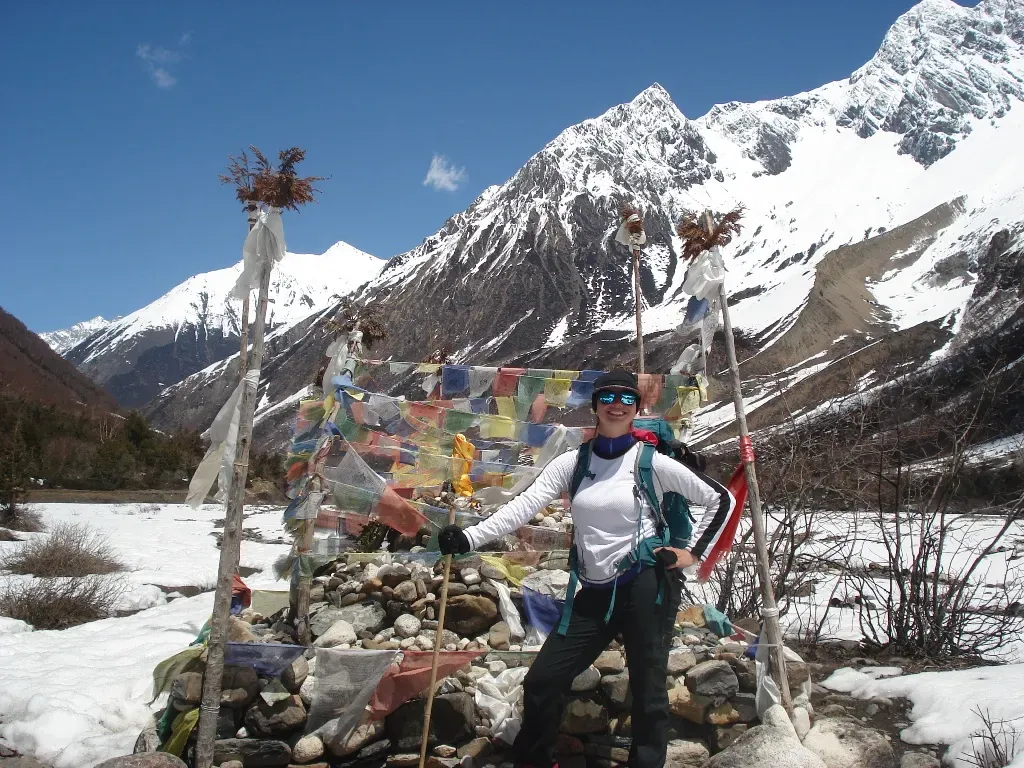
This guide covers what the trek involves, what you will see, the practical requirements, and whether it is the right journey for you.
What Is the Manaslu Tsum Valley Heli Trek?
The Manaslu Tsum Valley Heli Trek is a hybrid itinerary. Trekkers follow the Budhi Gandaki River north into the Manaslu Conservation Area, branch off into the sacred Tsum Valley, and continue toward the base of Mount Manaslu (8,163 m), the eighth-highest mountain on Earth. Instead of retracing their steps or crossing the demanding Larkya La Pass (5,106 m), trekkers board a helicopter from a high-altitude village and fly back to Kathmandu or Pokhara, with the route depending on weather and arrangements.
The appeal is simple. The walking portion delivers the region’s best cultural and scenic highlights, and the flight delivers aerial views of glaciers, ridgelines, and terraced valleys that few travelers ever see. It suits people with limited time, those who want less strenuous days, and anyone seeking a special experience without a three-week commitment.
Why Tsum Valley Deserves a Place on Your Bucket List
Tsum Valley, often called “Tsombo” or “the hidden valley,” was closed to outsiders until 2008. Its name comes from the Tibetan word for “vivid,” a fitting description of a place that has preserved its heritage with remarkable care.
A living Buddhist landscape. The valley is dotted with monasteries, mani walls, prayer wheels, and chortens. Local communities follow Tibetan Buddhist traditions, and many villagers still observe customs such as a reverence for all life, which has long kept hunting at bay.
Sacred sites. Mu Gompa, near the Tibetan border, and Rachen Gompa, a nunnery, are among the most visited. The Milarepa Cave, tied to the revered Tibetan yogi, and Dephyudonma Gompa add to the region’s spiritual weight.
Fewer crowds. Compared with the Annapurna and Everest regions, Tsum Valley sees only a small share of the traffic. Trails are quieter, teahouses feel personal, and encounters with locals are genuine rather than transactional.
Dramatic scenery. Expect suspension bridges over turquoise rivers, forests of rhododendron and pine, waterfalls spilling off cliffs, and peaks such as Ganesh Himal, Sringi Himal, and Himalchuli filling the horizon.
Sample Itinerary Overview
Exact schedules vary by operator, season, and group pace. A typical heli trek runs roughly 10 to 12 days, including arrival and departure.
Days 1–2: Kathmandu to Soti Khola. After arrival and trip preparation, you take a long drive via Arughat to Soti Khola, where the trail begins near the Budhi Gandaki River.
Days 3–4: Soti Khola to Jagat. You climb gently through subtropical forest and river gorges, passing villages such as Machha Khola and Khorlabesi. Jagat, a stone-paved settlement, is where permits are checked.
Days 5–6: Jagat to Chumling and Chhekampar. The trail enters Tsum Valley and the cultural atmosphere deepens. Stone-built villages, mani walls, and first views of the high peaks appear. Chhekampar sits on a wide plateau and offers a good base for exploring.
Day 7: Chhekampar to Nile and Mu Gompa. As you climb higher, the landscape opens up into an alpine, Tibetan-influenced terrain. Mu Gompa, at around 3,700 m, is among the valley’s most atmospheric stops.
Day 8: Return down the valley and onward to Lokpa. With acclimatization built in, the descent retraces key sections before joining the main Manaslu trail.
Days 9–10: Toward Samagaon. The route climbs to Samagaon (about 3,530 m), the largest village in the upper Manaslu region, where Manaslu’s glaciers and ridges dominate the view. Many itineraries include an acclimatization day with a visit to Pungyen Gompa or the Manaslu Base Camp trail.
Day 11: Helicopter flight to Kathmandu or Pokhara. You fly out over the valley you just walked, with aerial views of the range. Flights depend on weather, so operators usually build in a buffer day.
Best Time to Do the Manaslu Tsum Valley Heli Trek
Autumn (September to November) is the most popular season. Skies are typically clear, temperatures are comfortable, and mountain views are at their best. It is also the busiest time, so book early.
Spring (March to May) brings blooming rhododendrons, warmer days, and lush valley scenery. Haze can occasionally reduce distant visibility, but it remains an excellent season.
Winter and monsoon are harder. Winter brings snow and cold at higher elevations, while monsoon rains (June to August) cause landslides, leeches, and flight disruptions. Both seasons are generally best avoided for this route.
Permits and Regulations
Both Manaslu and Tsum Valley are restricted areas, so trekking requires special arrangements:
-
Manaslu Restricted Area Permit (RAP) and Tsum Valley RAP
-
Manaslu Conservation Area Project (MCAP) permit
-
Annapurna Conservation Area Project (ACAP) permit, if your route touches that zone
-
Trekking must be arranged through a registered Nepali trekking agency, with a licensed guide
-
Solo trekking is not permitted, and groups generally need a minimum of two trekkers
Permit costs and rules depend on the season and are updated periodically. Always confirm current fees and requirements with your operator or the relevant Nepali authorities before booking.
Difficulty and Fitness
This is a moderate to challenging trek. The heli return removes the hardest element, the high Larkya La crossing, but you will still walk for five to seven hours on many days, often on uneven terrain and steep sections. Altitudes above 3,500 m make acclimatization essential.
Good preparation includes cardio training, hiking with a loaded pack, and practicing long days on your feet for at least six to eight weeks beforehand. Altitude sickness can affect anyone regardless of fitness, so follow your guide’s advice, drink plenty of water, ascend gradually, and speak up at the first sign of symptoms.
Accommodation and Food
Teahouses along the route are simple but welcoming. Rooms are usually twin-bedded with shared bathrooms, and facilities become more basic with altitude. Meals center on dal bhat (rice, lentil soup, and vegetables), along with noodles, soups, potatoes, eggs, and local Tibetan-style bread. Hot drinks are plentiful. In remote stretches, electricity and charging may cost extra, and Wi-Fi is limited or unavailable, so treat the trek as a chance to disconnect.
What to Pack
-
Layered clothing: base layers, fleece, insulated jacket, waterproof shell
-
Broken-in trekking boots and quality socks
-
Sleeping bag rated for cold nights (teahouse blankets are not always enough)
-
Sun protection: hat, sunglasses, and high-SPF sunscreen
-
Trekking poles, headlamp, and reusable water bottle with purification tablets
-
A basic first-aid kit and personal medication
-
Travel insurance that covers high-altitude trekking and helicopter evacuation
Is the Heli Return Worth It?
For many travelers, absolutely. The helicopter cuts out several days of walking back down or over the pass, which suits those with tight schedules. It also adds a memorable aerial perspective and offers a practical fallback if someone is tired or unwell. The trade-off is cost and weather dependence, since mountain flights can be delayed by cloud or wind. Keep a flexible buffer in your travel plans.
Responsible Travel Tips
Tsum Valley’s culture is fragile, and respectful behavior matters. Walk clockwise around mani walls and chortens, ask permission before photographing people or religious sites, dress modestly, and avoid touching ritual objects. Carry out your non-biodegradable waste, support local teahouses, and hire local guides and porters fairly.
Conclusion
The Manaslu Tsum Valley Heli Trek offers an uncommon balance: remote Himalayan trails, deep cultural immersion, and the convenience of a scenic helicopter return. You walk among monasteries, rivers, and some of the world’s highest peaks, then leave with a bird’s-eye view of everything you crossed.
If you want an authentic Nepal journey that goes beyond the crowded classics, this route is worth serious consideration. Plan for the right season, secure permits through a reputable agency, prepare physically, and stay flexible with weather. Do that, and you will come away with memories that few trekkers ever earn.