

Traveling with only a carry-on has become a practical goal for many people in 2026. Rising checked-bag fees, tighter connection times, and the desire for simpler journeys make it worthwhile to master efficient packing. With the right approach, it is entirely possible to fit clothing, toiletries, electronics, and essentials for a week or longer into a single cabin-compliant bag. The key lies in planning, organization, and a few proven techniques that maximize every inch of space.
Start with a Capsule Wardrobe Mindset
The foundation of successful carry-on packing is choosing versatile clothing rather than packing for every possible scenario. Select pieces that mix and match easily within a limited color palette—neutrals such as black, navy, gray, white, and one or two accent colors work well. A common guideline for a one-week trip is roughly five tops, two to four bottoms, one or two layering pieces, a compact jacket, and limited shoes.
Prioritize multi-use items. A button-down shirt that works for both daytime and evening, leggings that double as sleepwear or activewear, and a lightweight sweater that layers over multiple outfits reduce the total number of garments needed. Lay everything out before packing and remove duplicates or “just in case” items. Editing ruthlessly is one of the most effective ways to free up space.
Choose the Right Bag and Organize with Compression Cubes
A well-designed carry-on makes a noticeable difference. Hardshell spinners with structured interiors or thoughtfully compartmentalized backpacks help contain items and protect contents. Look for bags that maximize usable volume within airline size limits.
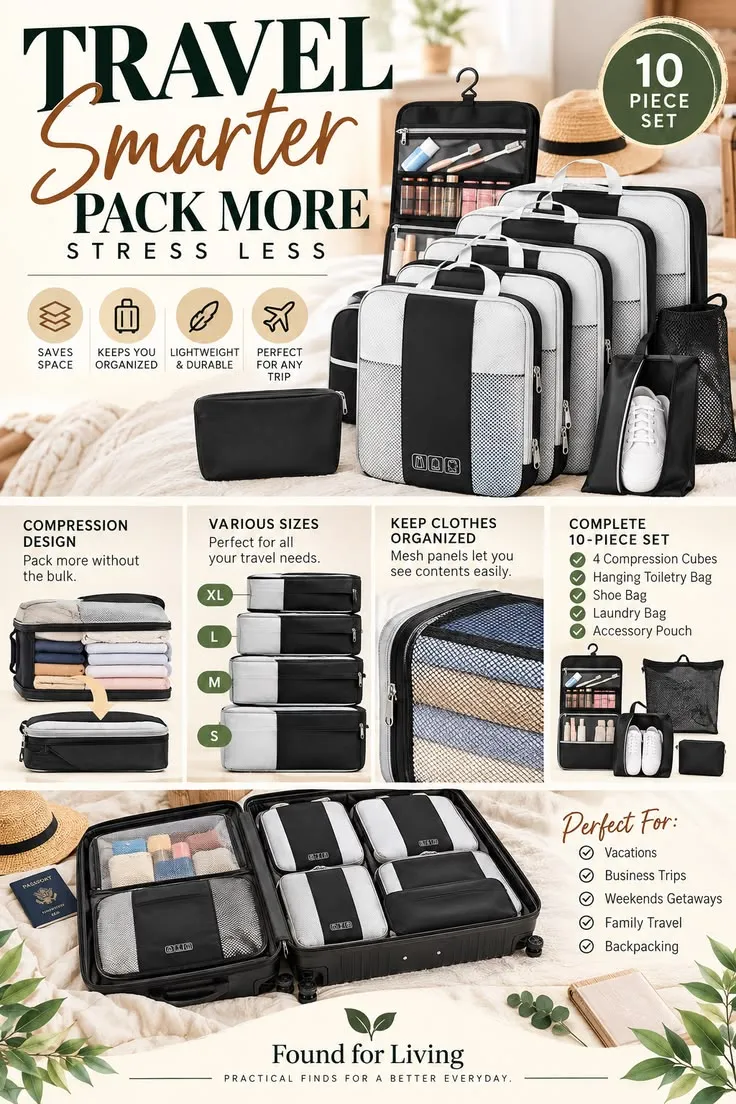
Compression packing cubes are widely regarded as essential. These organizers group clothing by category or outfit and then use a second zipper to squeeze out air, significantly reducing bulk. Soft items such as t-shirts, knits, and activewear compress especially well. Fill cubes to about 80 percent capacity so the compression zipper can close smoothly. Place heavier cubes near the bottom or against the back of the bag for better balance, and nest smaller cubes into remaining gaps.
Master Rolling, Folding, and Strategic Placement
Rolling soft clothing is a reliable space-saving method that also helps minimize wrinkles. T-shirts, jeans, underwear, and similar items can be rolled tightly and arranged side by side inside cubes. Structured pieces such as button-down shirts or blazers are often better folded carefully and placed on top to preserve their shape.
Stuff shoes with socks, chargers, or other small items to use interior space that would otherwise be empty. Limit footwear to two or three pairs total, including the pair worn while traveling. Place shoes at the bottom or along the sides of the bag, soles facing outward when possible.
Wear the bulkiest items—heavy jacket, boots, or thick sweater—on the plane. This single decision often creates the extra room needed for remaining clothing.
Streamline Toiletries and Electronics
Toiletries frequently consume more space than expected. Transfer products into travel-sized containers that meet liquid restrictions, and favor multi-use items such as a tinted moisturizer with SPF or a 2-in-1 shampoo. A compact, well-organized toiletry bag keeps everything contained and easy to remove for security screening.
Electronics and cables benefit from a dedicated organizer. Loose chargers and cords tangle and waste space; a small tech pouch keeps them neat and accessible. Pack only the essentials—phone, one versatile charger, earbuds, and any must-have adapters.
Create a Logical Packing Order
A consistent layout improves both packing efficiency and access during the trip. Heavier items and shoes go at the bottom. Compression cubes form the main middle layer. Smaller or frequently needed items, such as a change of clothes or medications, can sit near the top or in exterior pockets. Leave a small amount of flexibility for souvenirs or items acquired during travel.
For longer trips, plan to do laundry. Packing fewer clothes and washing mid-trip is often more practical than trying to bring two weeks of garments in a single bag. Laundry sheets or a small sink-washing kit support this approach without adding bulk.
Practical Habits That Make a Difference
Create a simple packing list and refine it after each trip. Note what was used and what was not. Over time this reduces the tendency to overpack. Choose fabrics that resist wrinkles and dry quickly when possible. Keep a small personal item or under-seat bag for valuables, medications, a change of clothes, and items needed during the flight so the main carry-on can be stored overhead.
Test the packed bag at home. Ensure it closes without excessive force and remains within typical size limits. Sitting on a hardshell case to close the zipper is a common final step when space is tight.
The Benefits of Traveling Lighter
Mastering carry-on packing delivers more than space savings. It eliminates time spent at baggage claim, reduces the risk of lost luggage, and makes navigating airports, trains, and city streets easier. The discipline of packing less also encourages more intentional choices about what is truly needed.
With a capsule approach, compression organization, careful rolling or folding, and attention to multi-use items, fitting everything into one carry-on becomes a repeatable skill rather than a stressful puzzle. Travelers who adopt these methods consistently find that they arrive with what they need, move more freely, and enjoy a simpler, more efficient journey.
Read more – gloryhouseworld.com